Does Oxandrolone Actually Burn Fat? Mechanisms and Evidence
Oxandrolone, better known by its brand name Anavar, is often described as a “fat-burning” steroid. In fitness forums and bodybuilding circles, it’s commonly associated with lean physiques, visible abs, and “dry” muscle definition. But does Oxandrolone actually burn fat — or is that reputation oversimplified?
To answer this honestly, we need to separate direct fat loss mechanisms, indirect effects, and what scientific evidence actually supports.
Table of Contents
What Oxandrolone Is — and Isn’t
Oxandrolone is an anabolic-androgenic steroid (AAS) originally developed for medical use, including:
-
Preserving lean tissue after severe weight loss
-
Treating muscle-wasting conditions
-
Supporting recovery from trauma or illness
It was not designed as a fat-loss drug in the traditional sense. Unlike stimulants or thyroid hormones, Oxandrolone does not directly increase metabolic rate in a dramatic way.
So where does the fat-loss reputation come from?
The Key Mechanisms Behind Oxandrolone’s “Fat Loss” Effect
1. Lean Muscle Preservation During Calorie Deficits
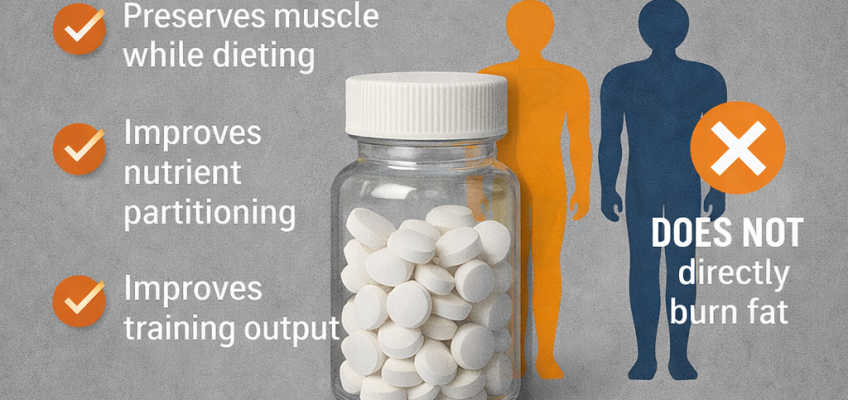
One of the strongest effects of Oxandrolone is its ability to preserve muscle mass while dieting.
When people diet naturally, they typically lose:
-
Fat
-
Muscle
-
Strength
Oxandrolone shifts this balance by:
-
Reducing muscle breakdown
-
Supporting nitrogen retention
-
Helping maintain training intensity
The result? A higher percentage of weight lost comes from fat, even if total fat oxidation isn’t dramatically increased.
➡️ This is fat loss by protection, not by aggressive burning.
2. Improved Nutrient Partitioning
Oxandrolone is believed to improve how the body uses nutrients:
-
Calories are more likely to support muscle tissue
-
Fewer calories are stored as fat
This doesn’t mean it “melts fat,” but it can make a caloric deficit more efficient.
Better nutrient partitioning often leads to:
-
Leaner appearance
-
Reduced fat gain during refeeds
-
Improved body composition over time
3. Increased Training Output
Another indirect mechanism is performance enhancement.
Users often report:
-
Higher strength retention while cutting
-
Better pumps and endurance
-
Ability to train harder despite low calories
Harder training → higher total energy expenditure → more fat loss over time.
Again, the steroid isn’t burning fat on its own — it’s supporting the conditions that allow fat loss to continue.
4. Androgen Receptor Activity in Fat Tissue
There is some evidence that androgens interact with fat cells, especially in stubborn fat areas.
Possible effects include:
-
Reduced fat cell size
-
Increased sensitivity to fat-mobilizing signals
However, this effect is modest compared to true fat-loss drugs and varies greatly between individuals.
What the Scientific Evidence Says
Clinical research on Oxandrolone shows:
-
Improved lean body mass
-
Reduced muscle wasting
-
Improved recovery and strength
Some studies observed reductions in body fat percentage, but:
-
This was often due to lean mass preservation
-
Not dramatic increases in fat oxidation
There is no strong evidence that Oxandrolone functions like a direct lipolytic agent (such as clenbuterol or thyroid hormones).
Why People Think Oxandrolone Burns Fat
The perception comes from a combination of:
-
Muscle retention during dieting
-
Loss of water retention
-
Harder, drier appearance
-
Visual changes in body composition
When muscle stays full and fat decreases slowly, the body looks dramatically leaner — even if the actual fat loss rate hasn’t skyrocketed.
Visual impact ≠ fat-burning mechanism.
Does Oxandrolone Help With Stubborn Fat?
In some cases, users report improvements in:
-
Lower abdominal fat
-
Love handles
-
Thigh fat
This is likely due to:
-
Hormonal environment changes
-
Improved nutrient use
-
Reduced cortisol impact
But results are inconsistent, and genetics play a huge role.
The Reality Check: Risks vs. Results
Even though Oxandrolone is often labeled as “mild,” it still carries risks:
-
Cholesterol imbalance
-
Suppression of natural testosterone
-
Liver stress
-
Long-term cardiovascular concerns
Any cosmetic fat-loss benefit must be weighed against these realities.
Final Verdict: Does Oxandrolone Actually Burn Fat?
Not directly.
Oxandrolone:
-
❌ Does not significantly increase fat-burning on its own
-
✅ Helps preserve muscle during dieting
-
✅ Improves body composition efficiency
-
✅ Enhances visual leanness
Its reputation as a fat burner comes from how it reshapes the fat-to-muscle ratio, not from melting fat cells.
For most people, diet, training consistency, sleep, and recovery remain far more powerful — and far safer — tools for fat loss.