Bulking vs. Cutting: Which Strategy Is Best for Your Fitness Goals?
In the world of fitness and bodybuilding, bulking and cutting are two foundational strategies used to build muscle, lose fat, and shape the ideal physique. Both methods rely on precise nutrition, smart training, and clear goal-setting. But the big question remains: Which strategy is best for your current fitness goals?
This guide breaks down both approaches, their benefits, risks, and how to choose the right phase based on your body type and desired outcomes.
Table of Contents
What Is Bulking?
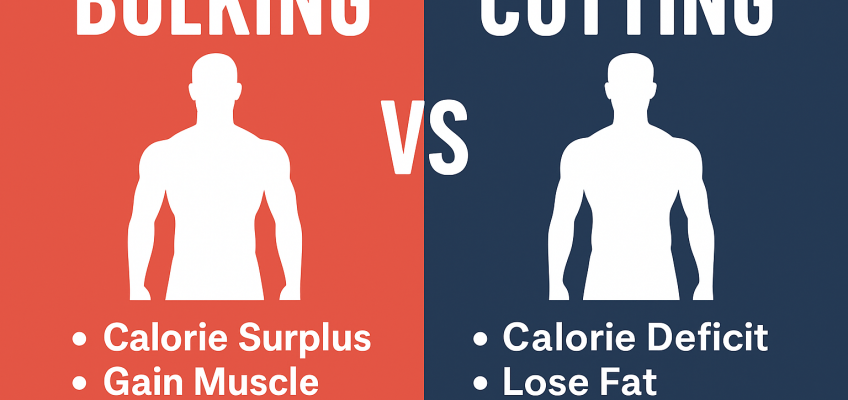
Bulking is a period in which you intentionally eat in a calorie surplus to support muscle growth.
Key Characteristics of Bulking:
-
Calorie surplus: 5–20% above maintenance
-
Goal: Build muscle mass
-
Training focus: Progressive overload, strength, volume
-
Macros: Higher protein, moderate/high carbs, moderate fats
Benefits of Bulking
-
Faster muscle growth
-
Increased strength
-
Higher energy levels in the gym
-
Better hormonal environment (especially for men)
Drawbacks of Bulking
-
Some fat gain is unavoidable
-
Poorly managed bulking leads to excessive fat accumulation
-
Requires discipline to avoid overeating
Types of Bulking
1. Clean Bulking
-
Controlled calorie surplus
-
Emphasis on whole, nutrient-dense foods
-
Minimizes fat gain
Best for: Beginners, recomposition goals, long-term lean mass building
2. Dirty Bulking
-
Large surplus; eating freely
-
Faster gains but significant fat accumulation
Best for: Hard gainers only
3. Lean Bulking (2025 Most Popular)
-
Small surplus + high protein + structured training
-
Ideal balance of muscle gain with minimal fat
Best for: Intermediate and advanced lifters
What Is Cutting?
Cutting is a phase where you eat in a calorie deficit to reduce body fat while maintaining muscle.
Key Characteristics of Cutting:
-
Calorie deficit: 10–25% below maintenance
-
Goal: Fat loss while preserving muscle
-
Training: Moderate-to-high intensity, maintenance of strength
-
Macros: High protein, lower carbs, controlled fats
Benefits of Cutting
-
Visible muscle definition
-
Improved vascularity and aesthetics
-
Better metabolic health
-
Helps reset appetite after bulking
Drawbacks of Cutting
-
Energy levels may drop
-
Harder to build new muscle
-
Hunger and cravings increase
-
Risk of muscle loss if done incorrectly
Which Strategy Should You Choose?
Choosing between bulking and cutting depends on your current body composition and your priority goals.
⭐ If Your Goal Is Muscle Growth → Bulking
Choose bulking if:
-
You are a beginner or intermediate lifter
-
You’re lean (10–15% body fat for men / 18–24% for women)
-
Your strength numbers have plateaued
-
You want to increase overall size
Best approach: Lean Bulking
⭐ If Your Goal Is Fat Loss → Cutting
Choose cutting if:
-
You have visible fat to lose
-
You’re above 18–20% body fat (men) or >28% (women)
-
Aesthetic definition is your goal
-
Your bulk has gone on too long
Best approach: Slow Cutting (minimizes muscle loss)
⭐ If Your Goal Is Body Recomposition → Neither (Hybrid Approach)
Recomp works best when:
-
You are a beginner
-
You’re overweight and new to training
-
You’re returning after a break
Strategy:
-
Maintenance calories
-
High protein
-
Strength training
-
8–12 reps hypertrophy range
How Long Should Each Phase Last?
-
Bulking: 3–6 months
-
Cutting: 6–12 weeks (longer for higher fat levels)
-
Recomp: 8–16 weeks
Bulking vs. Cutting: Quick Comparison
| Feature | Bulking | Cutting |
|---|---|---|
| Calories | Surplus | Deficit |
| Goal | Build muscle | Lose fat |
| Best For | Skinny/lean individuals | Those wanting definition |
| Training | Heavy + high volume | Moderate + strength-focused |
| Fat Gain | Inevitable | Reduced |
| Muscle Gain | High | Low/moderate |
Conclusion
Both bulking and cutting are essential tools for sculpting a strong, aesthetic physique. The best strategy depends on your current body composition, training experience, and long-term goals.
If you want to get bigger → bulk.
If you want to get leaner → cut.
If you want both and you’re new to training → recomp.
Choose your phase wisely, commit to it, and follow a structured plan — and your progress will skyrocket.